
The NAM of the Game – Navigating FDA’s Shift Toward Animal Testing Alternatives
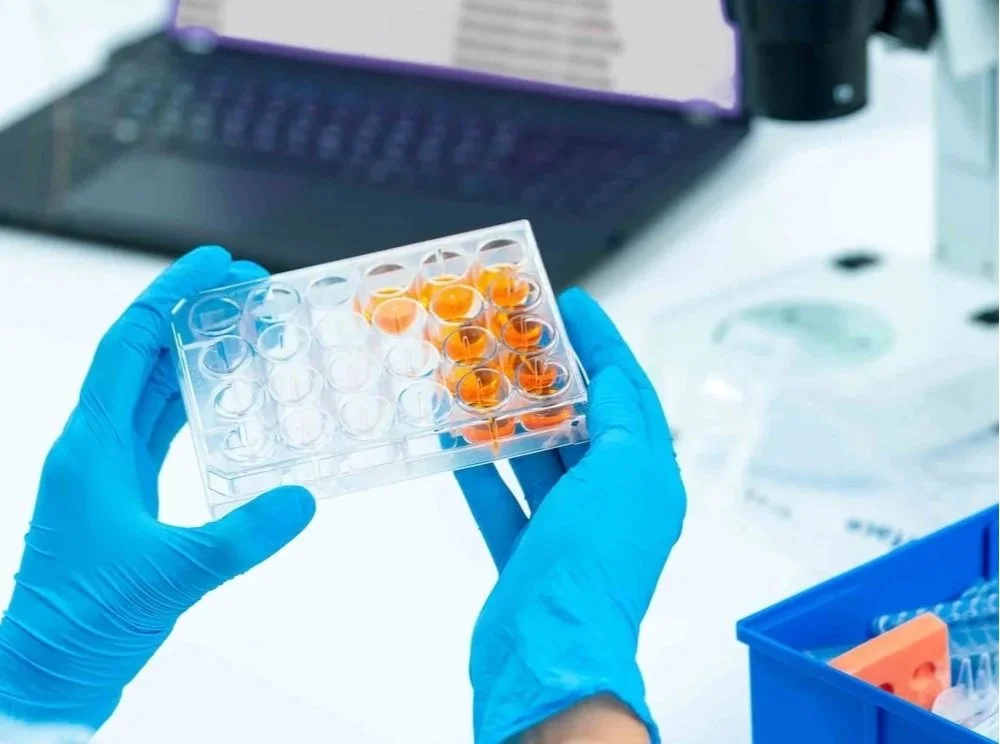
Welcome back! On 09/21/2026, the Food and Drug Administration (FDA) published a direct final rule, “FDA Updates Regulations to Advance Innovative Alternatives to Animal Testing”. The FDA has updated regulatory terminology so that animal studies are no longer presented as the only way to generate non-clinical safety evidence for human drugs and biological products. The change creates more room for scientifically sound “New Approach Methodologies” (NAMS), such as human cell assays, organoids, organs-on-chips, and computer models. This update is not a blanket waiver of animal testing, and it does not lower the evidence needed to protect patients. With this opportunity, the strategy must still address the risks of the whole product and each constituent part.
In several drug and biologic regulations, the rule replaces terms such as “animal tests,” “animal studies,” “in vitro,” and “preclinical” with broader terms such as “nonclinical tests” and “nonclinical studies.” It also adds definitions that recognize both traditional animal studies and non-animal or human biology-based methods. The rule is designed as a terminology update, not a reduction in safety standards. FDA expressly says it adds no new requirements, does not prohibit animal studies, and does not change the evidence needed for a regulatory decision. It is scheduled to take effect on February 4, 2027 if FDA receives no significant opposing comments by December 7, 2026 [2] . Companies should monitor the docket because FDA may withdraw the direct final rule if a large number of adverse comments are submitted.
A NAM is simply a newer way to answer a safety or performance question without automatically using a conventional animal study.
Examples include:
Testing a product on human cells
Using three-dimensional tissue models
Connecting a miniature organ systems on a chip
Predicting exposure with computer models
Combining several sources of evidence.
FDA’s NAMs resource page emphasizes that the method must be scientifically reliable for the specific question being asked. [3]
For products requiring an Investigational New Drug (IND), New Drug Application (NDA), or Biological License Application (BLA), the updated language gives sponsors a clearer basis to propose NAMs for specific questions, for example, local tissue toxicity, drug release, cell viability, inflammatory response, immunogenicity, biodistribution, or interactions between the drug and tissue component. For example, a company manufacturing a combination tissue and drug product, a human tissue model may sometimes reveal clinically relevant effects that an animal species cannot reproduce. Computer models may help estimate exposure or support dose selection. Using a complementary set of methods can reduce or refine animal testing and in some cases, replace a specific animal study.
However, the rule does not mean that any alternative test will be accepted. A sponsor still must show that each method is reliable, relevant to the product, and suitable for its stated “context of use.” A model that predicts liver toxicity may not answer questions about implantation site inflammation, tumorigenicity, systemic exposure, tissue integration, or long-term degradation. Because combination products can create risks that are not visible when the drug and tissue are tested separately, FDA may still expect an integrated assessment and where justified, animal data.
Here are some key considerations:
Companies should determine their regulatory pathway, confirm product classification, the lead center, and submission route before designing or redesigning a nonclinical program.
Identify the decision the test must support such as a starting dose, local tolerance, biodistribution, or immunogenicity, and then choose the method.
Define the context of use, state the product, endpoint, exposure range, tissue type, duration, and decision boundaries for which the NAM is reliable.
Build a weight of evidence by combining mechanistic data, analytical characterization, prior clinical or platform knowledge, in vitro results, computational predictions, and any necessary in vivo findings.
Use qualified or well supported tools where possible as FDA explains that qualification establishes the boundaries within which a method can be relied upon.
Engage FDA early, ask targeted questions and provide enough data for FDA to evaluate the proposed replacement or reduction.
Preserve data integrity, document protocols, controls, system qualification, sample traceability, acceptance criteria, deviations, software versions, and model assumptions.
Companies should also decide whether the NAM can support comparability after manufacturing, tissue-source, formulation, device, or scale changes, and plan for a lifecycle change.
FDA’s update is best understood as permission to use the right scientific tool, not permission to provide less evidence. Product developers may gain the most by using human-relevant methods to answer questions that conventional species models handle poorly. The strongest programs will be endpoint specific, transparent about uncertainty, grounded in manufacturing reality, and discussed with FDA before pivotal study decisions are locked in.
Thanks for joining! Check back later as we continue following industry trends!
Have questions? Contact us here!
References
[2] https://www.federalregister.gov/documents/2026/09/22/2026-19350/nonclinical-testing-terminology
Additional Resources and Further Reading:
FDA Draft Guidance (March 19, 2026): General Considerations for the Use of New Approach Methodologies in Drug Development: https://www.fda.gov/regulatory-information/search-fda-guidance-documents/general-considerations-use-new-approach-methodologies-drug-development
FDA: Reducing Animal Testing in Nonclinical Studies – Year One Progress and the Path Forward:
Roadmap to Reducing Animal Testing in Preclinical Safety Studies
New Approach Methodologies (NAMs) Database of Use Case Examples